
Rust has a way of spreading if you ignore it. What starts as a small orange patch on a garden tool or patio chair can work its way deeper into the metal over months, eventually compromising the piece entirely. The good news is that most rust is very removable if you know how to remove rust from metal using the right method for the severity.
To remove rust from metal, you need either a chemical that dissolves iron oxide (acids like vinegar, lemon juice, or commercial rust removers) or physical abrasion (sandpaper, wire brush, sandblasting) — or a combination of both. The best approach depends on how deep the rust goes and what the metal is used for.
First: Assess the Rust Level
Not all rust is the same. Before you start, figure out what you’re dealing with:
| Rust Level | Appearance | What It Means |
| Surface rust | Orange or red staining on the surface | Easy to remove; metal is still intact |
| Moderate rust | Flaking, pitting beginning | Takes more work; metal still salvageable |
| Heavy rust | Deep pitting, metal is brittle or flaking away | Can be treated but some damage is permanent |
| Through-rust | Holes forming in the metal | Metal may be too far gone for most methods |
Method 1 — White Vinegar Soak (Best for Tools and Hardware)
White vinegar contains acetic acid, which reacts with and dissolves iron oxide (rust) without damaging the metal underneath. It’s safe, cheap, and remarkably effective on moderate rust.
Steps:
- Submerge the rusty item in a container of undiluted white vinegar
- Let it soak for 1–8 hours (check hourly; don’t leave more than 24 hours)
- Remove and scrub with a stiff brush, steel wool, or an old toothbrush
- Rinse with water and dry immediately and thoroughly
- Apply oil or a rust-preventive coating to prevent recurrence
Best for: Tools, bolts, hinges, small hardware items that can be fully submerged.
Method 2 — Baking Soda Paste (Good for Light Surface Rust)
A baking soda paste is gentle enough for surfaces where you don’t want acid, and effective for light surface rust that hasn’t penetrated deep.
Steps:
- Mix baking soda with enough water to form a thick paste
- Apply the paste generously to the rusty area
- Let it sit for 1–2 hours
- Scrub with a brush or crumpled aluminum foil (surprisingly effective)
- Rinse and dry completely
Best for: Kitchen knives, chrome fixtures, bathroom hardware, light rust on any metal.
Method 3 — Lemon Juice + Salt (Chemical + Abrasive Combo)
Citric acid in lemon juice dissolves rust; salt acts as a gentle abrasive to help lift it off.
Steps:
- Sprinkle salt generously over the rusty surface
- Squeeze lemon juice over the salt to saturate it
- Let sit for 2–3 hours
- Scrub with the lemon rind (the rind itself works as a scrubber)
- Rinse and dry immediately
Best for: Decorative metal pieces, knives, small items where you want a gentler approach.
Method 4 — Commercial Rust Remover (Best for Heavy Rust)
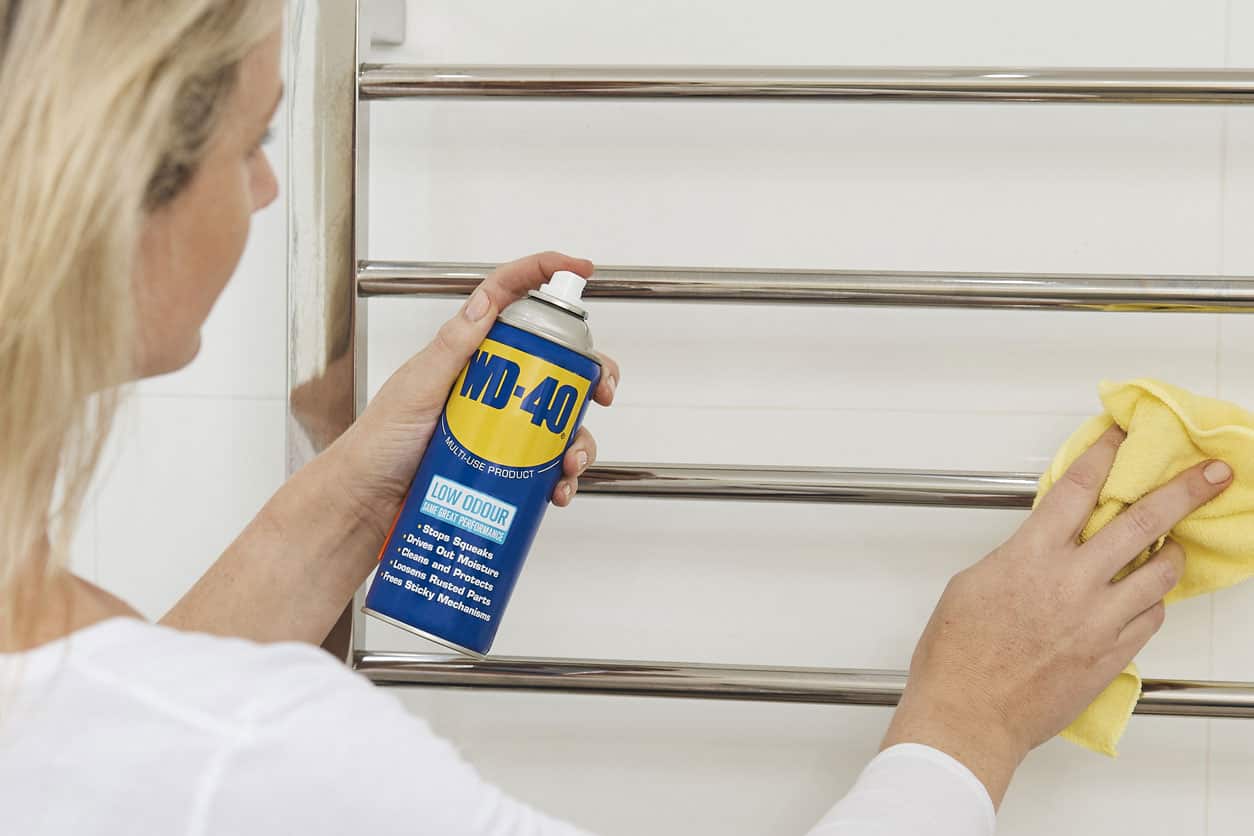
Products like Evapo-Rust, WD-40 Rust Remover Soak, or Rust-Oleum Rust Dissolver use chelating agents or phosphoric acid to aggressively dissolve rust without requiring heavy scrubbing.
Steps:
- Apply or submerge in the product as directed
- Wait the recommended time (usually 15–30 minutes for light rust, longer for heavy)
- Rinse and neutralize as directed
- Dry thoroughly and apply protective coating
Best for: Car parts, heavily rusted tools, large metal surfaces, situations where scrubbing isn’t practical.
Method 5 — Sandpaper and Wire Brush (Physical Removal)
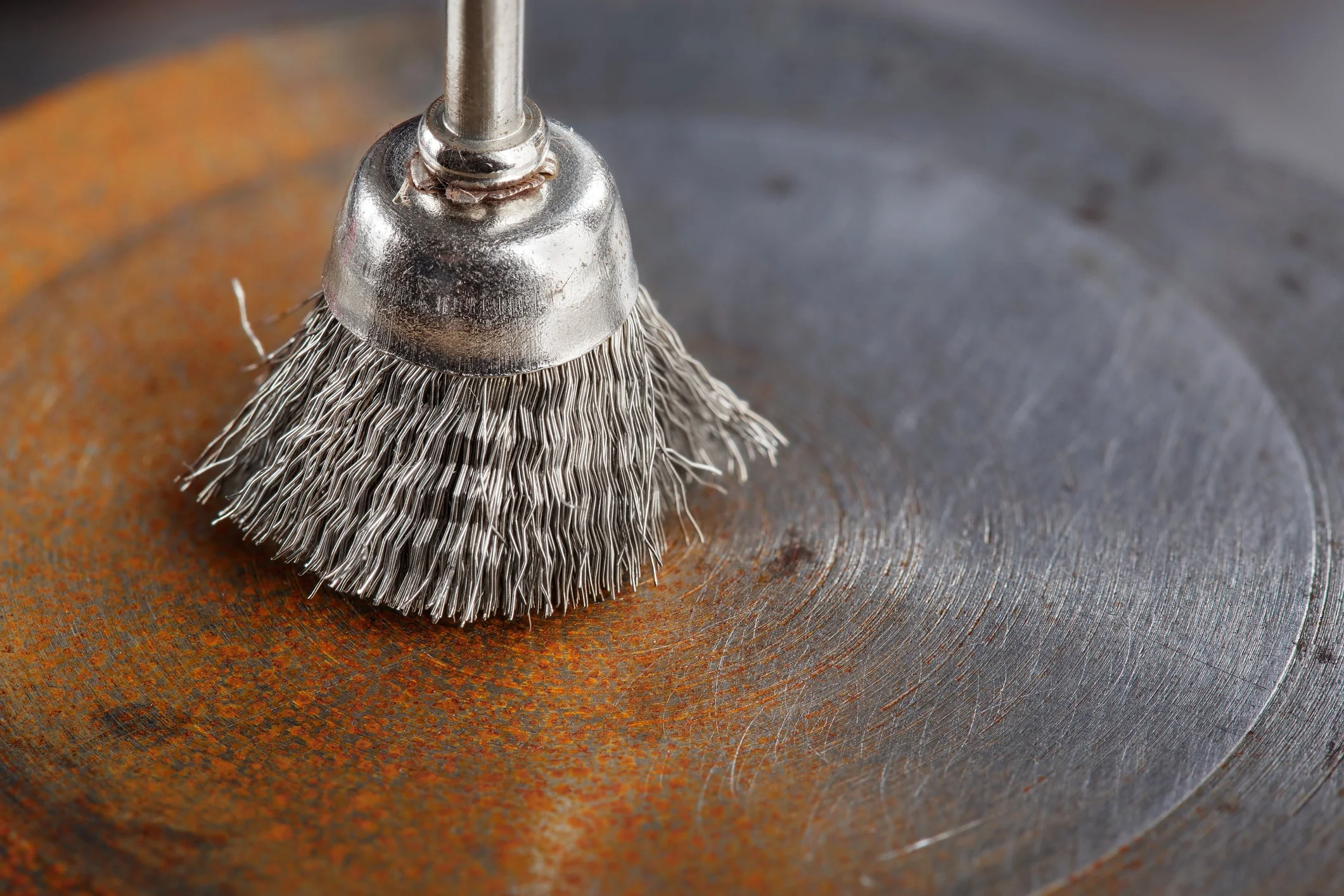
When rust is thick and chemical soaking isn’t feasible — large metal furniture, structural pieces, car bodywork — physical abrasion is the most reliable approach.
Process:
- Start with coarse sandpaper (60–80 grit) or a wire brush attachment on a drill
- Work in circular motions until the rust is gone
- Finish with finer grit (120–220) to smooth the surface
- Wipe clean, apply primer, then paint to seal and protect
Best for: Metal furniture, gates, car bodies, structural metal where soaking isn’t possible.
Method 6 — Electrolysis (For Valuable or Delicate Pieces)
This is the most thorough rust removal method and causes zero surface damage — ideal for antiques or tools you want to preserve perfectly. It uses an electrical current to convert rust back to iron.
What you need: A car battery charger, washing soda (sodium carbonate), a plastic container, rebar, and the rusty item.
It sounds complicated but is a well-documented DIY process — look up “electrolysis rust removal” for step-by-step guides. The results are extraordinary for the right items.
After Removing Rust — Prevention Is Everything
Rust removal is wasted effort if you don’t protect the metal afterward:
| Protective Method | Best For |
| Clear coat or paint | Outdoor metal, furniture, gates |
| Mineral oil or WD-40 | Tools, cast iron, non-painted metal |
| Rust-inhibiting primer + paint | Car parts, major metal projects |
| Cold-bluing (gun oil) | Steel tools and hardware |
| Wax | Chrome and decorative pieces |
Dry storage matters too — moisture is what drives rust. Store metal tools with a thin coat of oil, especially through humid months.
Quick Reference: Which Method for Which Situation
| Situation | Best Method |
| Rusty tools (soakable) | White vinegar soak |
| Kitchen knives / light rust | Baking soda paste or lemon + salt |
| Heavy rust on machinery | Commercial rust remover |
| Metal furniture / large surfaces | Sandpaper + wire brush |
| Antiques / precision items | Electrolysis |
| Rust stains on fabric or concrete | Oxalic acid (Bar Keepers Friend) |
Bottom Line
Rust removal isn’t one-size-fits-all — but with the right method, almost any rusty metal piece can be restored. White vinegar is the best starting point for most household items. Commercial products handle the heavy-duty cases. And whatever method you use, protect the metal afterward — without that step, you’ll be doing it all again in six months.


