By the time you’ve settled the dog and shifted your child from one hip to the other, the evening already feels full. There has been a spilt drink at some point, muddy paws have crossed the hallway more than once, and snacks have travelled all over the house.
Later, when things calm down, you realise the smell in the room is not random at all. It is coming from the carpet, which has been collecting everything your household throws at it.
Luckily, you can freshen it without turning your routine upside down, so keep reading to learn how.
Baking Soda
It’s Saturday morning. You’ve finally got 20 minutes to yourself, and your carpet is looking clean enough.
Then, you sit down and catch that faint, stale scent hanging about. It’s time to bring out the secret weapon hiding in your kitchen cupboard: baking soda.
Baking soda is cheap, simple, and surprisingly effective at absorbing odours. Sprinkle it generously over the affected areas, making sure you cover the entire surface.
Now comes the hard part: waiting. Leave it to sit for at least a few hours or overnight if you can manage it. The more time you give it, the more effective it’ll be.
When you’re ready, vacuum it up thoroughly. You’ll probably need to make several passes to get all the powder out of the pile.
This works brilliantly for general, everyday smells. Whether it’s the lingering scent of damp trainers, yesterday’s dinner, or that stale smell that creeps in when you haven’t opened the windows in a while, baking soda is the answer.
White Vinegar
Sometimes, though, you might be dealing with something more serious than general stale smells.
Maybe the dog had an accident, or a drink didn’t quite make it to the table. Either way, baking soda alone isn’t going to cut it.
White vinegar is your next line of defence. Mix equal parts white vinegar and water in a spray bottle, then lightly mist the affected area.
Yes, it smells sharp at first, and your living room might briefly feel like a chip shop. But once it dries, that acidic scent will disappear, taking the bad smells with it.
Vinegar works by neutralising odour-causing bacteria at the source. So, it’s one of those no-nonsense solutions that gets the job done without any fuss.
Just make sure you test it on a hidden patch first, especially if you’re dealing with delicate or natural fibres.
Activated Charcoal
Some days, you don’t want to spray or sprinkle anything. You just want the smell to disappear without lifting a finger.
Activated charcoal is ideal for that. What makes it so useful is that it doesn’t mask odours. It absorbs them from the air.
To use it properly, don’t sprinkle it directly onto your carpet. That sounds efficient in theory, but in practice, it’ll turn into a gritty clean-up mission you didn’t sign up for. Instead, place small bowls of loose activated charcoal or breathable charcoal bags around the room.
It’s particularly useful in spaces that don’t have good ventilation, like spare rooms and basements.
Just keep in mind that you won’t usually notice a huge difference overnight, though. It works gradually, so leave it in place for several days at least.
Coffee Grounds
Now, imagine you’ve hosted friends, cooked something ambitious, and by the end of the evening, your home smells faintly like a fusion of garlic and spices. Even after cleaning, your carpet is still holding onto these odours.
Don’t worry, though, because we have an easy fix. Used coffee grounds can absorb odours in a similar way to baking soda.
Once they’re completely dry, you can place them in shallow bowls around the room to draw out smells from the air.
You probably don’t want to scatter them directly over light-coloured carpets unless you’re feeling adventurous. But as an air-based neutraliser, they’re surprisingly effective.
Not to mention, there’s something satisfying about repurposing yesterday’s coffee to deal with today’s chaos. Talk about being resourceful!
Essential Oils
Once you’ve got rid of the bad smell, you might fancy adding something a bit nicer to the mix.
This is where essential oils earn their keep. Add a few drops to your baking soda before you scatter it, and you’ll get a subtle fragrance boost.
The keyword here is ‘subtle.’ Your home probably already has plenty competing for attention in the scent department—candles, dinner, laundry, and whatever the kids have brought home from school. You don’t need another layer. So, a couple of drops will do the trick.
If you’re not sure which essence to go for, lavender, eucalyptus, and citrus oils are the most popular ones.
Lavender is calming without being overpowering, eucalyptus gives you that fresh, clean feeling, and lemon or citrus oils add a pleasant, zesty scent.
One final tip: check if your pets can handle whatever oil you’re using. Some aren’t safe for animals, so do a quick Google search before you start.
Commercial Enzyme Cleaners
There are times when home remedies simply aren’t enough.
Pet accidents that have soaked in or spills that you didn’t notice straight away can leave lingering smells that refuse to budge, no matter how much baking soda you use.
In these cases, you can use a commercial enzyme cleaner.
Unlike basic deodorisers, they break down the organic matter causing the smell. They’re designed specifically for carpets and upholstery, which makes them particularly effective in busy households with children or pets.
Follow the instructions on the bottle. Spray the product and give the enzymes time to work their magic. Some products need only 10 to 15 minutes, while others work best if left for several hours.
Steam Cleaning
Eventually, there comes a point where you’ve vacuumed, sprayed everything in sight, and your carpet still smells a bit stale.
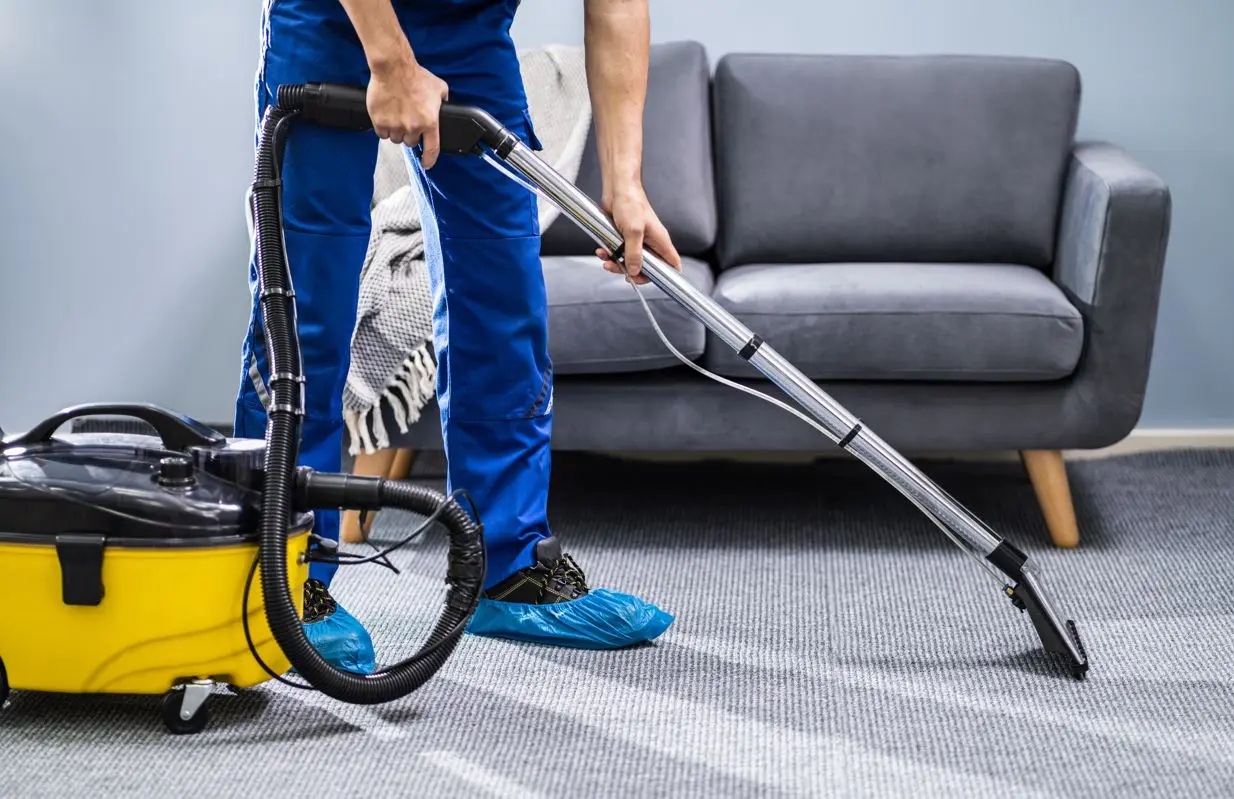
Steam cleaning strips everything out. Hot water extraction pulls dirt and smell-causing particles that surface treatments can’t reach.
You can rent a machine and have a go yourself if you’re confident working out the settings and fancy the challenge.
But if your household involves constant spills and foot traffic that never stops, bringing in a carpet cleaning business is the smarter move.
Across the UK, professionals have industrial equipment that extracts the bacteria and organic matter causing the smell in the first place. So, you won’t end up with the same issue after a few days.
Conclusion
You’re now armed with enough knowledge to tackle pretty much any carpet smell your household throws at you.
Pick whichever method suits the situation, set aside 20 minutes, and enjoy a home that doesn’t smell like a documentary of the past three months. You’ve earned it.